
Waste Reduction And Lifecycle Monitoring
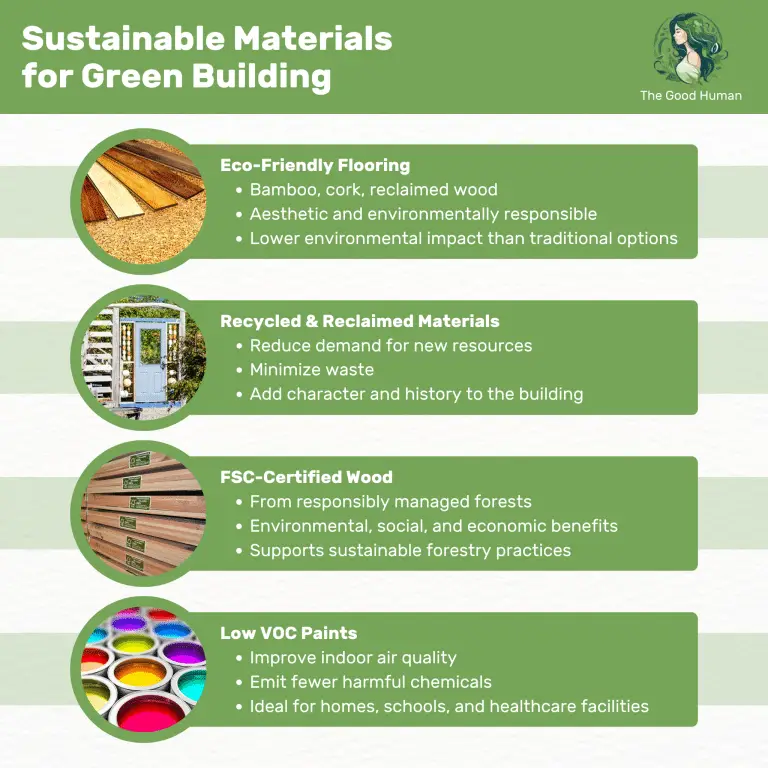
U-factor, solar warmth gain coefficient (SHGC), and correct setup outlining govern real-world effectiveness. Concrete cores resist rot, pests, and moisture-related degeneration, lowering long-lasting repair work cycles. Storage capacity, filtering design, and overflow management determine system effectiveness. Panel angle, sun exposure, and inverter performance affect lasting power production. Eco-friendly building products, additionally called lasting or eco-friendly products, are resources used in the building and construction market that are specifically picked to reduce environmental damage. These products are meticulously made and created with a focus on lowering their carbon impact, power usage, and overall ecological influence. The goal is to support a constructed environment that is both lasting and effective, contributing to a healthier world by reducing the unfavorable effects that standard structure products often carry ecological communities and human wellness. Eco-friendly structure products systems, a group of environment-friendly, sustainable materials that provide remarkable cost savings in waste, energy consumption, and carbon emissions, are among one of the most encouraging alternatives. These materials aid in conserving operating costs, rise building strength, and boost interior air high quality in addition to minimizing the damaging ecological impacts of buildings. The U.S. green structure materials market is experiencing strong development, driven by climbing ecological awareness, more stringent laws, and need for energy-efficient building. This is being driven by the immediate need to deal with ecological issues like climate change and lower cities' carbon footprint. Using eco-friendly structure materials plays a vital role in lessening greenhouse gas emissions. Recycled products, lasting timber, and natural insulations considerably reduce construction tasks' carbon impacts. These materials are sourced responsibly and produced with less power, lowering emissions during production and transport. Over the last few years, the building market has observed an expanding trend towards eco-friendly materials.- The approach of producing environment-friendly structures differs relying on different elements such as the kinds and ages of the structures, the details practices and societies, and economic, ecological, and social preferences.Panel angle, sun exposure, and inverter effectiveness influence long-term energy production.Bamboo is among the fastest-growing plants and a highly renewable resource, making it a perfect option for lasting structure projects.Supportive policies from governments, such as tax obligation motivations or subsidies for sustainable structure techniques, can help minimize the greater initial costs of eco-friendly materials.
Eco-friendly Structure Materials Sector Information
Power effectiveness can result in the reduction of the use of coal, which is a vital resource of power. Proof reveals that green structures' social, economic, and environmental advantages are unsurpassed. Although it is thought about costly, this idea is rejected because of its enormous benefits, which have actually assisted achieve international results, consisting of weather change and much more. Existing household and commercial structures are in charge of nearly 40% of carbon discharges in the United States. New building and construction depends greatly on natural resources, such as wood, rock, metal, and water, more impacting the setting. Eco-friendly architecture, likewise known as lasting or environmentally friendly building, supplies various advantages.Green Structure Products System, A Best Remedy For Accomplishing Paris Agreement Goals
It concentrates on areas such as energy, water, interior setting high quality, and waste management. NABERS is extensively utilized in the commercial property sector to demonstrate environmental efficiency to lessees and investors. This income is reported as "clean" with respect to its alignment with UN Sustainable Development Goals (SDGs) 11 and 13. One more appealing sector is bio-based materials stemmed from farming or plant residues as lasting options to polymers, plastics and composites. Products like hempcrete, mycelium compounds and agricultural fiber concretes supply high performance insulation capabilities. Hilbers constructs community value into our jobs by providing expert proficiency, remarkable customer care, and quality business building. As a Northern The golden state and nationwide commercial general specialist, we have the knowledge, abilities, and knowledge to handle everything from a multi-million buck facility task to a little commercial remodelling. We pay attention to our client's goals and develop strategies based upon their organization demands.What are the advantages and disadvantages of green buildings?
Pro: Green structures make use of extra effective and sustainable products for construction, such as straw, recycled metal, concrete, lamb''s woollen, compressed planet blocks, lumber, and bamboo. 5 Every one of these are recyclable, reusable, and nontoxic. Disadvantage: Structure materials that are efficient and eco-friendly can be much more expensive.